
If you have watched much anime, you have already been to Obon without being told what it was. The grandparents' house in the countryside. The cicadas. The trip to a cemetery with a bucket and a ladle. A small cucumber with toothpick legs sitting on a shelf. A fire lit at the front door at dusk. Everyone in yukata, and a strange, warm heaviness in the air.
That's Obon (お盆) — and for three days every August, it quietly reorganizes the entire country.
Here's the one-sentence version for overseas readers: Obon is the time of year when the spirits of the dead come home to visit, and the living gather to receive them. It is not sad, exactly. It is closer to a family reunion that happens to include the people who have died. Understanding it unlocks a whole mood that runs through Japanese storytelling — and, very practically, it explains why you should never, ever try to travel across Japan on August 13th.
When it happens: August 13–15 (mostly)
For most of Japan today, Obon runs August 13 to 15 or 16. You'll sometimes see it called "the month-late Bon," because it was historically a July event on the old lunar calendar and got shifted a month later when Japan modernized its calendar. A few regions — parts of Tokyo especially — still do it in July, but if someone says "Obon," assume mid-August.
It is not a formal national holiday on the calendar, and yet it functions as the single biggest one. Companies close. Cities empty out. And a huge share of the population travels at exactly the same time, in the same direction: back to the family home. Hold that fact — the whole back half of this article depends on it.
The heart of it: everyone goes to grandma's house
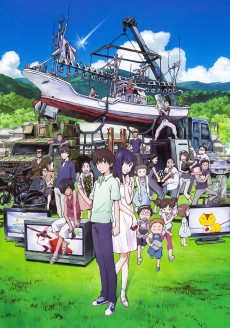
The core of Obon is 帰省 (kisei) — the return to your hometown. Adult children who moved to Tokyo or Osaka for work pack up the family and go back to the house they grew up in, or to the grandparents' place in the countryside. Aunts, uncles, and cousins converge on one house. For a few days, three or four generations are under one roof.
If you want the single best on-screen portrait of this, it's Summer Wars — a film literally built around a sprawling extended family gathering at a grand old country estate in summer, with dozens of relatives filling every room. Strip out the sci-fi plot and it is a documentary about what a big Japanese family reunion feels like: the noise, the food, the matriarch holding it all together, the sense of a house that only comes fully alive a few times a year.
Non Non Biyori and Only Yesterday capture the other side of it — the deep quiet of the rural hometown that city relatives return to, all rice fields and cicadas and time moving slower.
What families actually do
Across the three days there's a rough rhythm, though it varies by region and Buddhist sect:
- **お墓参り (ohakamairi) — visiting the grave.** Families go to the cemetery, wash the family gravestone with water and a ladle, clear weeds, set out flowers and incense, and press their hands together. That bucket-and-ladle cemetery scene you've seen a hundred times in anime is this.
- **迎え火 (mukaebi) — the welcome fire.** On the evening of the 13th, families light a small fire at the entrance of the house to guide the spirits home from the other world. Some hang a lantern for the same purpose.
- **The 精霊棚 (shōryōdana) — the spirit altar.** A special shelf or the family Buddhist altar (仏壇, butsudan) is set with offerings — fruit, vegetables, sweets, the deceased's favorite foods.
- **送り火 (okuribi) — the send-off fire.** On the evening of the 15th or 16th, another fire sends the spirits back. The giant flaming characters on the mountainsides above Kyoto (五山送り火) are the most famous version of this.
The emotional key is that the dead are treated as guests, not as an abstraction. You welcome them, you feed them, you spend a few days with them, and you see them off.
The cucumber horse and the eggplant cow

This is the detail that charms everyone, and it's genuinely lovely once you know the logic.
Families make 精霊馬 (shōryōuma), "spirit horses," out of two summer vegetables and some disposable chopsticks or toothpicks stuck in as legs:
- A cucumber becomes a horse. A horse is fast. It's for the arrival — so the ancestors' spirits can hurry home to their family as quickly as possible.
- An eggplant becomes a cow (or ox). An ox is slow, and strong. It's for the departure — so the spirits can amble back to the other world unhurried, carrying a big load of offerings and gifts on its broad back.
Read that again: the family is telling their dead please rush back to us, and then leave slowly, and take plenty with you. An entire feeling about a lost grandparent, encoded in two vegetables from the garden. This is the kind of small, concrete, deeply humane ritual that Japanese culture does better than almost anyone, and it's why Natsume's Book of Friends — a series about a boy who can see the spirits and gods everyone else has forgotten — feels so at home in this season.
Why so much anime is haunted by summer
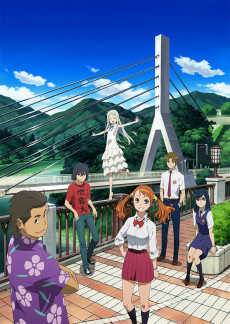
Once you know about Obon, a pattern in anime becomes impossible to un-see: summer is the season of ghosts.
In Western storytelling, the dead come back in autumn — Halloween, October, falling leaves. In Japan, the membrane between this world and the next thins in August, in the heat and the cicada drone. That's why so many anime ghost stories, spirit stories, and tales of the dead returning are set specifically in a rural summer:
- Anohana — a dead friend reappears one summer to a group who never got to say goodbye. It is, in effect, an Obon story: the returning spirit, the unfinished farewell, the sending-off.
- Into the Forest of Fireflies' Light — a summer-after-summer romance with a spirit who cannot be touched.
- Summer Time Rendering — the return to a rural home island where the dead are not staying dead.
- Natsume's Book of Friends and Mushi-shi — the whole genre of quiet encounters with the unseen world, drenched in summer.
Even films with no ghosts in them — Grave of the Fireflies, Only Yesterday — use the Japanese summer as a season of memory and the returning past. Obon is the cultural bedrock under all of it. When an anime wants to talk about the dead, grief, memory, or a family's history, it reaches for a hot rural August, and the audience understands instantly why.
The traveler's warning: do not fight the Obon rush
Now the practical part, and it is important enough that we made it half the headline.
Because tens of millions of people return to their hometowns in the same three-day window, Obon produces one of the two or three worst travel crushes of the entire Japanese year (the others being New Year and Golden Week). If you are visiting Japan in mid-August, this affects you directly.
What actually happens:
- The shinkansen (bullet trains) are packed. Reserved seats on popular routes — especially anything running out of Tokyo toward Kyoto, Osaka, and points west/north — sell out well in advance. The non-reserved cars fill to standing-room-only, with lines on the platform. Trains run at over 100% capacity on the peak days.
- The direction reverses. The crush runs out of the big cities at the start of Obon (around the 11th–13th) and back into them at the end (around the 15th–16th). Nationwide traffic-jam and reservation reports read like clockwork every year.
- Expressways clog and domestic flights fill. Rental cars too.
- The quiet flip side: central Tokyo can actually be pleasant and half-empty during peak Obon, because everyone has left. Some restaurants and small shops close, but the big-city crowds thin out.
If you're traveling in mid-August
- Reserve shinkansen seats the moment you can (reservations open one month ahead). Do not assume you can just walk up and ride on the 13th.
- **Travel against the flow** — into the cities early in Obon, out of them late — or simply avoid intercity travel on the 13th and the 16th.
- Or lean in: if you're already in Tokyo, mid-Obon is a fine time to enjoy a quieter city, and local summer festivals and Bon-odori dances are happening all over.
Bon-odori (盆踊り), by the way, is the joyful public face of all this — the summer festival dance, held in yukata around a raised platform, that welcomes and honors the spirits. The festival episodes your favorite anime loves so much are very often Bon-odori. The dead are home; the town dances.
Why it's worth understanding
Obon is Japan at its most quietly characteristic: a festival for the dead that isn't frightening, a reunion that includes the departed, grief expressed as hospitality, and a cosmology you can build out of a cucumber. It's the reason anime summers ache the way they do, and the reason a bullet train on August 13th is a bad idea.
If you're in Japan this August, light a thought for someone you've lost — and book your train early.
More culture explainers on AnimeBuzz: the kokuhaku confession, the bukatsu club system, and the senpai-kohai hierarchy. Or browse the data: all-time rankings, by genre, by tag.
Sources and notes
- お盆に行う迎え火・送り火、何のため?(トクバイニュース) — dates, welcome/send-off fires, month-late Bon
- お盆のキュウリとナスが表す「精霊馬」とは?(はせがわ) and お盆にナスやキュウリを用意するのはなぜ?(@DIME) — the cucumber horse / eggplant ox and their meanings
Customs vary by region and Buddhist sect; this describes the most widespread mid-August observance. Travel-crush timing is typical and varies year to year — always check current reservation and traffic forecasts before you go.